 469-522-7777
 sales@speedshieldusa.com
 469-522-7777sales@speedshieldusa.com
Car detailing myths can cost you thousands and harm your vehicle. This guide debunks common misconceptions to help you protect, preserve, and maintain your car smartly.
Table of Content
Every car owner has heard them. Those persistent car detailing myths that spread through parking lots, online forums, and family gatherings like wildfire. These misconceptions cost drivers thousands of dollars in unnecessary repairs and missed opportunities to protect their investment.
Professional car detailing isn't just about making your vehicle sparkle. It's a science-backed approach to automotive care that preserves value, extends lifespan, and maintains performance. Yet myths continue to cloud judgment and prevent smart maintenance decisions.
This comprehensive guide tackles the most damaging auto detailing myths head-on. We'll explore misconceptions about car waxing, ceramic coating, interior care, and professional services. By the end, you'll have the knowledge to make informed decisions about your vehicle's care.
Car detailing is full of misconceptions that can lead to costly mistakes or unnecessary caution. Below, we break down 25 of the most common myths, separating fact from fiction, so you can care for your vehicle the right way and keep it looking its best.

The Truth: Regular washing actually protects your paint from damage.
Dirt, salt, bird droppings, and environmental contaminants cause far more harm than proper washing ever could. These substances etch into paint surfaces and create permanent damage when left untreated.
Professional detailers recommend washing every two weeks minimum. Use proper techniques with quality car shampoo and microfiber towels to maintain your vehicle's protective coating.
The Truth: Modern touchless car washes are generally safe when used correctly.
The key lies in understanding the difference between touchless systems and brush-equipped facilities. Touchless car washes use high-pressure water and specialized detergents without physical contact.
However, these systems can't replace thorough hand washing and detailing. They're convenient for maintenance between professional services but shouldn't be your only cleaning method.
The Truth: Clear coat needs protection just like any other surface.
A clear coat is essentially a thin layer of paint without pigment. It faces constant assault from UV rays, acid rain, and environmental pollutants. Without protection, it becomes cloudy, scratched, and eventually fails.
Car wax provides essential UV protection and creates a sacrificial barrier. Modern synthetic waxes and sealants offer superior durability compared to traditional carnauba products. For comprehensive protection options, consider exploring Paint Protection Film in Dallas services.
The Truth: Wax formulations vary dramatically in protection, durability, and application requirements.
Carnauba wax offers deep warmth and shine but requires frequent reapplication. Synthetic sealants provide longer protection but may lack the visual depth some enthusiasts prefer.
Professional detailers choose products based on your climate, usage patterns, and aesthetic preferences. Cookie-cutter approaches rarely deliver optimal results.
The Truth: Ceramic coatings make washing easier but don't eliminate maintenance requirements.
These advanced protective films create hydrophobic surfaces that repel water and contaminants. Dirt slides off more easily, and washing becomes more effective with less effort.
However, ceramic coatings still accumulate contamination over time. Regular maintenance washing preserves their protective properties and visual clarity.
The Truth: Every vehicle benefits from professional detailing regardless of make or model.
A well-maintained Honda Civic receives the same protection benefits as a BMW. Paint correction, interior preservation, and protective coatings extend vehicle life and maintain resale value across all price points.
Budget-conscious car owners often see the greatest return on detailing investments because they keep vehicles longer and need maximum preservation. Many also enhance their vehicle's appearance with Vinyl Wraps Installation in Dallas for additional protection and style.
The Truth: Household cleaners can cause irreversible damage to automotive surfaces.
Dish soap strips protective waxes and can damage rubber seals. Glass cleaners with ammonia attack window tinting films. Kitchen degreasers remove essential oils from leather and vinyl.
Automotive-specific products are formulated for the unique materials and conditions vehicles face. The small price difference prevents thousands in potential damage.
The Truth: Polishing has limitations and requires proper technique to avoid damage.
Light scratches and swirl marks respond well to professional polishing compounds. However, deep scratches that penetrate through clear coat may require paint correction or touch-up work.
Aggressive polishing removes material from your paint surface. Excessive or improper polishing can thin clear coat and create more problems than it solves.
The Truth: Professional paint correction restores and protects when performed correctly.
This myth stems from horror stories about inexperienced technicians using wrong products or techniques. Certified paint correction specialists use precise methods to remove defects while preserving maximum clear coat thickness.
Paint correction often saves vehicles with damaged finishes from expensive repainting. The process removes oxidation, scratches, and contamination that washing alone cannot address.
The Truth: Professional detailing provides essential protection and maintenance beyond appearance.
Interior detailing prevents cracking, fading, and premature wear of seats and surfaces. Exterior protection guards against rust, paint failure, and structural damage from environmental exposure.
Engine bay detailing removes corrosive substances and allows for easier maintenance inspections. These protective benefits far exceed simple aesthetic improvements.
The Truth: New vehicles benefit immediately from professional protection.
Factory paint often contains imperfections from manufacturing and transport. Swirl marks, contamination, and minor scratches appear before the first owner takes delivery.
Immediate paint correction and protection application provide the best foundation for long-term preservation. Waiting allows damage to accumulate unnecessarily.
The Truth: Professional detailing costs significantly less than repair and replacement.
Consider the price of repainting a single panel versus maintaining the original finish through regular care. Interior replacement costs dwarf the investment in proper cleaning and protection.
Regular detailing extends vehicle life by years and maintains higher resale values. The math clearly favors preventive care over reactive repairs.
The Truth: Proper pressure washing technique is safe and effective for automotive use.
Distance, angle, and pressure settings determine safety. Professional detailers use appropriate nozzles and maintain safe distances to remove contamination without paint damage.
The real danger comes from using narrow-angle tips at close range or excessive pressure settings. Education and proper equipment eliminate these risks entirely.
The Truth: Quality microfiber towels are the safest option for automotive surfaces when used correctly.
This myth likely originates from experiences with cheap microfiber products that feel rough or scratch surfaces. Professional-grade microfiber towels are engineered for automotive use with appropriate density and fiber construction.
Proper washing and maintenance keep microfiber towels safe and effective. Replace towels when they become worn or contaminated beyond cleaning.
The Truth: Different materials require specific products and techniques for safe cleaning.
Leather needs different care than vinyl. Chrome requires different polishes than painted surfaces. Window films have specific cleaning requirements that differ from bare glass.
Professional detailers maintain extensive product knowledge and select appropriate formulations for each surface. One-size-fits-all approaches often cause expensive damage.
The Truth: Interior preservation directly impacts health, comfort, and vehicle value.
Neglected interiors harbor bacteria, allergens, and odors that affect occupant health. UV damage causes cracking and fading that reduces comfort and functionality.
Interior surfaces often cost more to replace than exterior paint repairs. Proper cleaning and protection prevent premature wear and maintain like-new conditions.
The Truth: Professional detailing enhances natural beauty without creating artificial appearance.
This perception often results from seeing vehicles with improper product application or cheap aftermarket modifications. Quality detailing reveals and preserves the manufacturer's intended finish.
Matte and satin finishes receive appropriate care that maintains their unique characteristics. Professional detailers respect original design intentions while maximizing protection.
The Truth: Protection duration varies by product, environment, and usage patterns.
Traditional carnauba wax may last 2-3 months under ideal conditions. Synthetic sealants extend protection to 6-8 months. Ceramic coatings provide years of protection but still require maintenance.
Harsh climates, frequent driving, and exposure to contaminants reduce protection lifespan. Professional assessment determines optimal reapplication schedules for your specific situation.
The Truth: Automotive care requires ongoing maintenance to remain effective.
Think of detailing like other vehicle maintenance. Oil changes, tire rotations, and brake inspections happen regularly because conditions constantly change.
Environmental exposure, driving conditions, and normal wear require periodic attention. Consistent care costs less and provides better results than sporadic intensive treatments.
The Truth: Results depend on knowledge, tools, and technique rather than simply being professional or amateur.
Educated enthusiasts with quality products and proper techniques can achieve excellent results. However, most car owners lack the time, space, and specialized knowledge for comprehensive detailing.
Professional detailers offer expertise, specialized tools, and efficiency that justify their services. They also carry insurance and warranties that protect your investment.
The Truth: Scratch repair depends on depth, location, and surrounding paint condition.
Surface-level scratches respond well to appropriate polishing compounds. Scratches that catch fingernails typically require professional paint correction or touch-up work.
Attempting to remove deep scratches with consumer products often creates larger problems. Professional assessment prevents costly mistakes and determines proper repair methods.
The Truth: Clean engine bays provide functional benefits beyond appearance.
Dirt and grease accumulation traps heat and moisture that accelerate component wear. Clean engines run cooler and allow easier inspection of leaks and wear patterns.
Professional engine bay cleaning removes corrosive substances that damage expensive components. Regular maintenance extends engine life and improves reliability.
The Truth: Paint colors and types require specific product selection for optimal results.
Dark colors show swirl marks more readily and need different polishing approaches than light colors. Metallic paints require specialized compounds to avoid streaking and color distortion.
Single-stage paints need different care than clear-coated finishes. Professional detailers select products based on your specific paint system and condition.
The Truth: Protection is the primary long-term benefit of professional detailing services.
Cleaning removes existing contamination, but protection prevents future damage. Sealants, waxes, and coatings create barriers against environmental assault.
Interior protection prevents UV damage, staining, and wear. Exterior protection guards against oxidation, etching, and paint failure. These protective benefits far exceed temporary cleaning results.
The Truth: Environmental exposure continues after detailing, requiring ongoing maintenance.
Professional detailing creates optimal conditions and maximum protection. However, driving, weather, and environmental factors continuously affect your vehicle's condition.
Protective coatings make maintenance easier and extend time between services. Regular washing and periodic professional care maintain the benefits of comprehensive detailing work.
Avoid common mistakes and protect your vehicle by following these essential tips. From choosing the right products to mastering proper techniques, these strategies help ensure your car stays in top condition while saving time, money, and frustration.
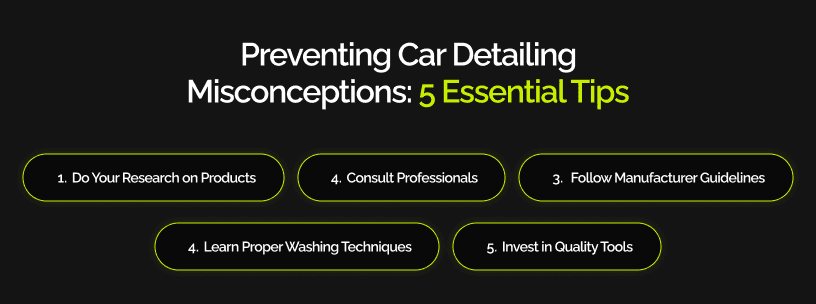
Quality detailing products come from established manufacturers with proven track records. Read reviews from actual users, not just marketing materials. Understand product limitations and proper application techniques before purchase.
Avoid products making unrealistic claims about permanence or universal application. Quality manufacturers provide detailed instructions and realistic performance expectations.
Experienced detailers offer valuable insights about your specific vehicle and local conditions. They understand how different factors affect maintenance requirements and can recommend appropriate services.
Professional consultations often cost less than fixing mistakes from improper DIY attempts. Their expertise helps you make informed decisions about products and techniques.
Vehicle manufacturers provide specific care recommendations based on materials and finishes used. These guidelines consider warranty implications and long-term durability.
Aftermarket modifications may require different care approaches. Consult with specialists familiar with your specific modifications to avoid damage or warranty issues.
Two-bucket wash methods prevent contamination transfer. Microfiber towels require proper folding and rotation during use. Understanding these basics prevents most washing-related damage.
Temperature, timing, and product dilution ratios affect cleaning effectiveness and safety. Proper technique makes good products work better and prevents expensive mistakes.
Professional-grade tools last longer and provide better results than cheap alternatives. Quality microfiber towels, applicators, and brushes make significant differences in outcomes.
Consider tools as long-term investments in your vehicle's care. Quality equipment often costs less per use over time and prevents damage from inferior products.
These 25 car detailing myths represent just the tip of the iceberg when it comes to automotive care misconceptions. Understanding the truth behind these myths saves money, prevents damage, and helps you make informed decisions about your vehicle's maintenance.
Professional detailing isn't about vanity or luxury. It's about protecting your investment, maintaining safety, and preserving the vehicle that serves your daily needs. The science behind modern detailing products and techniques delivers measurable benefits that far exceed simple appearance improvements.
Quality car maintenance requires ongoing attention from knowledgeable professionals who understand your specific needs. Whether you choose DIY approaches or professional services, education remains your best defense against costly myths and misconceptions.
Don't let outdated information cost you thousands in unnecessary repairs or missed opportunities to protect your investment. Consider exploring professional Paint Protection Film in Dallas, Vinyl Wraps Installation in Dallas, or Window Tinting Installation in Dallas to give your vehicle the protection it deserves.
Ready to experience the difference that professional expertise makes? Contact Speed Shield today to discuss your vehicle's specific needs and discover how proper detailing can enhance both protection and performance for years to come.
The most persistent myths include beliefs that washing damages paint, all waxes are identical, and detailing is only cosmetic. These misconceptions prevent proper vehicle care and waste money on inappropriate products or services.
Professional detailing protects paint when performed correctly. Damage occurs from improper techniques, contaminated tools, or using wrong products for specific paint types. Quality detailers use safe methods that enhance rather than harm finishes.
Full detailing frequency depends on usage, environment, and protection level. Most vehicles benefit from comprehensive detailing every 3-6 months, with regular washing every 2 weeks. Harsh conditions may require more frequent attention.
Professional services typically cost less than repairing damage from neglect or improper care. The expertise, specialized tools, and warranties justify the investment for most car owners. Consider the value of your time and the cost of potential mistakes.
Car wax and ceramic coatings provide different types of protection. Wax offers temporary protection lasting months, while ceramic coatings provide years of durability. Each has specific advantages depending on your needs and budget.
Dedicated enthusiasts with proper knowledge, tools, and time can achieve professional-level results. However, most car owners lack the expertise and equipment for comprehensive detailing. Professional services offer efficiency and expertise that justify their cost.
Interior detailing prevents premature wear, maintains health through proper sanitization, and preserves resale value. Neglected interiors cost significantly more to repair or replace than maintaining through regular professional care.
Detailing services provide comprehensive care that goes far beyond basic washing. While regular washing maintains cleanliness between detailing appointments, professional services address protection, correction, and preservation that washing alone cannot provide.
Common paint protection myths include beliefs that new cars don't need protection and that all protective products work the same way. Understanding proper protection timing and product selection prevents expensive mistakes and maximizes your investment.
Recent Blogs
Ready to Start Your Custom Car Transformation?
From personalized consultations to flawless installations, we’ll help you bring your vision to life with unmatched precision and care.

Speed Shield USA
Driven by Precision. Built for Protection.We specialize in high-end car customization, paint protection, and detailing services that elevate your vehicle's look and longevity.
Quick Links
Get in Touch

15177 Business Ave Addison, TX 75001

469-522-7777

sales@speedshieldusa.com

Mon - Fri: 8AM - 5PM


